Can Dental Implants Treat Periodontal (Gum) Disease?

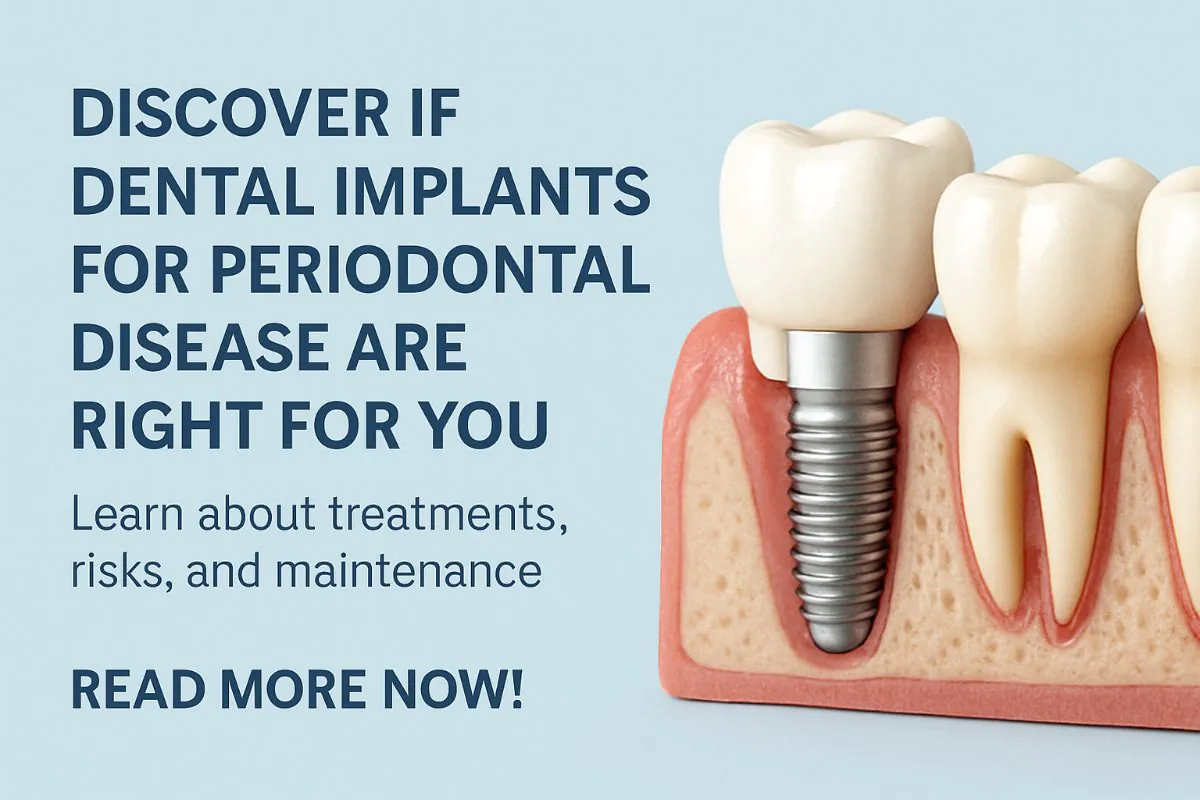
A close-up image showing a dentist pointing to a dental implant placed in a jawbone affected by periodontal disease, with healthy gums surrounding the implant. No text on image.

Periodontal (gum) disease is an infection of the gums and the bone that holds teeth in place. Left untreated, it can cause bleeding, loose teeth, bad breath, and bone loss. Many people ask whether dental implants for periodontal disease can be a lasting solution after the gum infection is controlled. This post explains when implants may be possible, what preparation is needed, the risks and alternatives, and the next steps to find out if implants are right for you.

How periodontal disease harms teeth and the jawbone

Gum disease starts as gingivitis (red, swollen gums) and can progress to periodontitis, where the infection destroys the ligament and bone around teeth. Bone loss weakens the foundation that supports teeth and future implants. Receding gums expose roots and make cleaning harder. Without enough bone and healthy soft tissue, replacing teeth becomes more complex, and implant success can be jeopardized.

When dental implants for periodontal disease become an option

Controlled infection first

Active gum disease must be treated and stabilized before considering implants. Treatment may include deep cleanings (scaling and root planing), antibiotics, and improved home care. The goal is to eliminate infection so the implant site can heal and stay healthy.

Enough bone and healthy soft tissue

Implants need solid bone to anchor and healthy gums to protect them. A dental team uses imaging and clinical exams to measure bone volume and gum quality. If the bone is too thin or missing, grafting or other procedures can rebuild it over several months, allowing the implant to be placed predictably.

Common preparatory treatments before implants

Bone grafts: Add bone material to low or missing areas; healing usually takes 3–6 months.

Ridge augmentation: Rebuilds the jaw contour where teeth were lost; similar healing time.

Sinus lift: Raises the sinus floor to add bone in the upper back jaw; often takes 4–6 months to heal.

Extractions with socket preservation: Preserves bone after a tooth is removed to limit shrinkage.

Soft-tissue grafts: Add gum tissue to improve coverage and esthetics; heals in weeks to months.

These steps increase the chance that a dental implant will integrate and last long term.

Risks, success factors, and long-term maintenance

Prior periodontal disease raises the risk of peri-implantitis (infection around an implant) if oral hygiene or maintenance lapses. Success depends on careful daily cleaning, regular professional checkups, quitting smoking, and controlling systemic issues like diabetes. Lifelong maintenance and close follow-up reduce complications and protect both natural teeth and implants.

Alternatives to implants for patients with gum disease

Fixed bridges: Replace missing teeth without surgery, but require altering adjacent teeth and do not stop bone loss. Removable partials or dentures: Lower cost and faster, but less stable, and may need frequent adjustments. Periodontal-sparing restorations: Use conservative designs to keep gum tissue healthier. Each option has trade-offs in cost, longevity, bone preservation, and maintenance; discuss these with your clinician while gum disease is treated.

How Lakeview Comprehensive Dentistry approaches dental implants after periodontal disease

Lakeview uses a diagnostic-first model to decide candidacy and plan care. A 90-minute comprehensive exam includes TMJ, occlusion, periodontal screening, and low-dose 2D/3D imaging. Their Whole-Tooth Hygieneâ„¢ targets hard-to-clean surfaces before implant work. On-site digital lab tools and precise imaging help design predictable restorations and plan any required grafting or soft-tissue work.

How to find out if dental implants for periodontal disease are right for you

Next steps: schedule a comprehensive periodontal evaluation, get low-dose 3D imaging, review bone and soft-tissue needs, and discuss a maintenance plan. If you have a history of gum disease, ask about staged care that treats infection first, rebuilds bone or gum as needed, and then places implants. Book a consultation to get a personalized plan and a clear timeline for safe, long-lasting results.
* Considering A New Tooth Implant? Here’s What You Need To Know

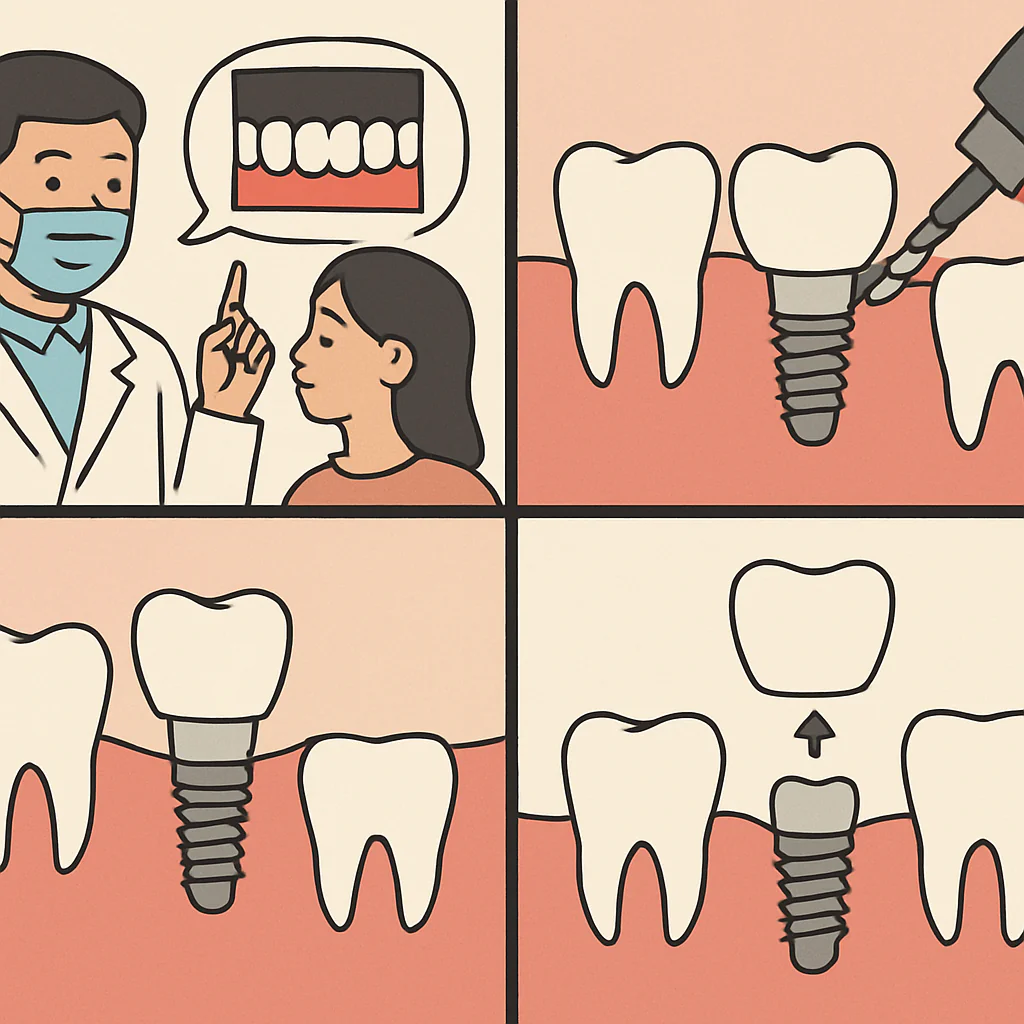
An animated graphic depicting the step-by-step process of a new tooth implant, from initial consultation to final crown placement. No text on image.

If you’re considering replacing a missing tooth, a dental implant is a durable, natural-feeling option. This short guide explains what implants are, who makes a good candidate, the steps involved, risks to watch for, and how to care for your restored tooth. It’s written for adults weighing implant treatment and for anyone wanting a clear, practical overview.

What Is a New Tooth Implant?

A dental implant is a small titanium post placed in the jawbone to serve as a tooth root. An implant system has three main parts: the implant (the metal post), the abutment (a connector), and the crown (the visible tooth). People choose implants to replace single teeth, support bridges, or anchor dentures because they look, feel, and function like natural teeth.

Who Is a Good Candidate for a New Tooth Implant?

Oral health and bone requirements

Good candidates have healthy gums and enough jawbone to hold the implant. If the bone has shrunk after tooth loss, a dentist may recommend a bone graft to build volume before placing the implant. Healthy gum tissue and control of gum disease are also needed to reduce the risk of complications.

Medical and lifestyle factors

Certain health issues can affect implant success. Uncontrolled diabetes, heavy smoking, some medications, and conditions that limit healing raise the chance of failure. Your dentist will review your medical history and may coordinate with your physician to manage risks before treatment.

What to Expect During the New Tooth Implant Process

Consultation and diagnostics

The process starts with an exam, X-rays, or low-dose 3D imaging, and digital scans. These diagnostics let the team plan implant size and position precisely. A treatment plan will outline timing, any needed grafts, sedation options, and costs.

Surgery and healing phases

During surgery, the implant is placed in the bone under local anesthesia or light sedation. Over several months, the implant fuses to the bone in a process called osseointegration. You may have a temporary tooth while the site heals. Healing time varies but often takes 3–6 months.

Final restoration

After healing, the abutment is attached, and a custom crown is fitted. Modern digital labs and intraoral scanning help make crowns that match your bite and appearance for a comfortable, natural result.

Common Risks, Complications, and How They’re Managed

Risks include infection, implant failure, and, rarely, nerve irritation. Dentists manage these with careful planning, sterile technique, and follow-up. Early signs of trouble—persistent pain, swelling, or loose parts—should prompt you to call your dentist.

Cost, Insurance, and Financing Options for a New Tooth Implant

Cost varies depending on whether you need one tooth or multiple teeth, whether bone grafting is needed, and the type of crown. Many dental plans cover part of the crown or surgery, but full coverage is rare. Common financing options include CareCredit, third-party loans, and in-office payment plans to spread costs.

Caring for Your New Tooth Implant

Treat an implant like a natural tooth: brush twice daily, floss or use interdental brushes, and keep regular dental cleanings. Attend professional maintenance visits so the team can check bone levels and gum health. Contact your dentist if you notice pain, mobility, or persistent swelling.

Why Choose Lakeview Comprehensive Dentistry for a New Tooth Implant

Lakeview Comprehensive Dentistry offers a diagnostic-first model anchored by a 90-minute comprehensive new-patient exam and Whole-Tooth Hygieneâ„¢ to reach areas that routine brushing misses. Advanced tools include ultra-low-dose 3D imaging, digital intraoral scanning, and an in-house digital lab for precise, same-day restorations. Sedation options, strict sterilization and water purification, and 40 years of serving Lake County support safe, comfortable care. Financial transparency and multiple financing choices help you plan treatment with confidence.

Next Steps: Schedule a Consultation for Your New Tooth Implant

At your first visit, expect a detailed exam, 3D diagnostics, and a clear treatment plan with cost estimates. If you’re ready to learn whether a new tooth implant is right for you, contact Lakeview Comprehensive Dentistry to set up a consultation and get personalized answers.

What’s The Average Cost Of A Dental Implant? (2024 Pricing Guide)

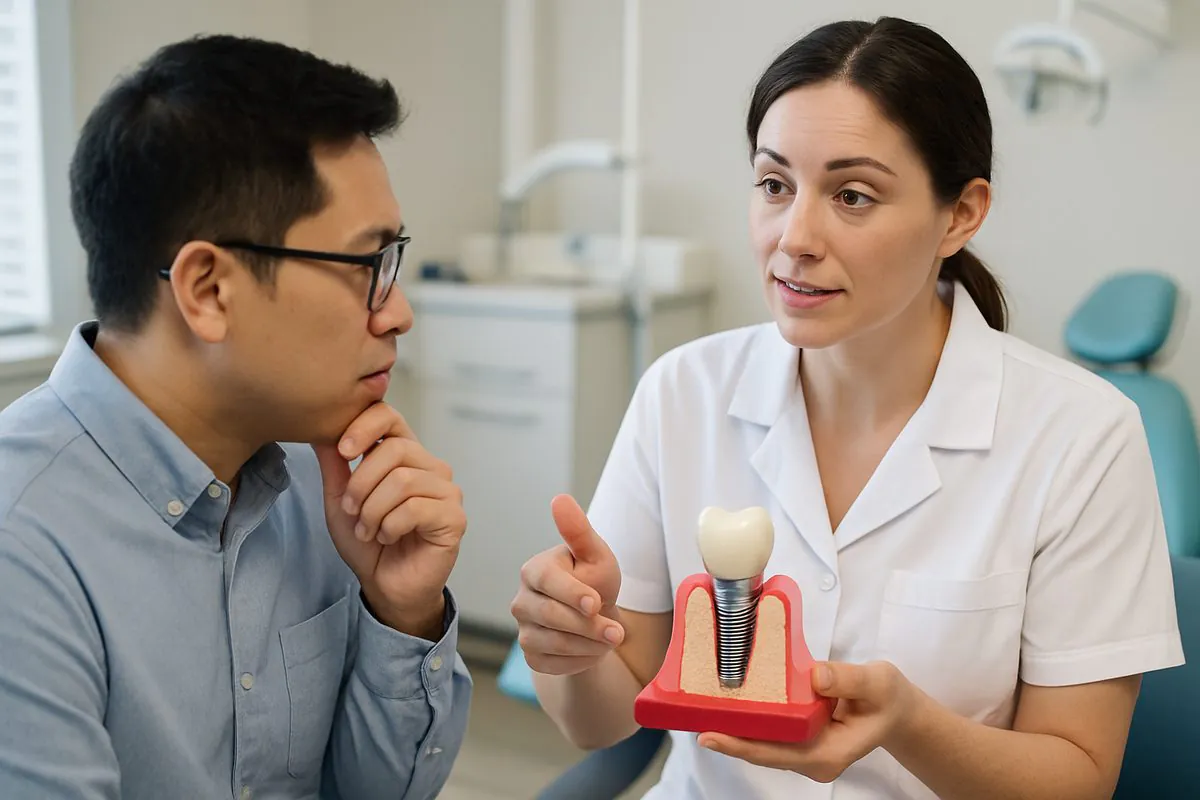
A person talking to a dentist about the cost of a dental implant. The dentist is holding a model of a dental implant to explain the costs involved. No text on the image.

If you’re asking “what’s the average cost of a dental implant“, a single implant (implant post + abutment + crown) typically runs about $3,000–$6,000 nationwide.

Costs vary by case—simple single-tooth work sits near the low end, while multi-tooth implants or full-arch reconstructions can be much higher. This post breaks down what affects price, how insurance and financing usually work, smart questions to ask at a consult, and how to get an exact quote for your situation.

What’s The Average Cost Of A Dental Implant? Typical Price Ranges

A single implant replacement (post, abutment, and crown) commonly falls between $3,000 and $6,000. If you need several implants or an implant-supported bridge, expect $7,000–$30,000, depending on the number of teeth replaced. Full-arch options like All-on-4 or full-mouth reconstruction often start around $20,000 per arch and can be much more. These are national typical ranges — your final cost depends on your mouth, materials, and provider.

What Makes Up the Price: Components of Implant Cost

Implant hardware

The implant post is usually titanium or zirconia. Brand, design, and the implant system chosen affect cost. Premium brands or specialty implants cost more but may offer better long-term data.

Abutment and crown (prosthetic)

The abutment connects the post to the crown. The crown material (porcelain, zirconia) and lab fees matter. Same-day milled crowns in a digital lab can cost more up-front but reduce visits.

Surgery, imaging, and planning

Surgical fees cover placement, local anesthesia or nitrous, and any guided-surgery planning. Digital 3D imaging (CBCT) and computer-guided planning add accuracy — and cost.

Additional treatments

Extractions, bone grafts, sinus lifts, or periodontal care raise the total. If bone loss is present, grafting can add several hundred to several thousand dollars.

Key Factors That Drive Price Variation

Provider experience and training, case complexity, and the use of advanced tech (digital scanning, guided implants, in‑house lab work) all change cost. Better diagnostics and planning can reduce complications, often saving money in the long term, even if the initial cost is higher.

Insurance, Financing, and Ways To Lower Out-of-Pocket Costs

Many dental plans limit or exclude implants. Some plans offer partial coverage for the crown or related services. Lakeview handles non-contracted insurance plans with transparency and focuses on patient advocacy over plan rules. Common financing options include CareCredit, Proceed Finance, Cherry, and in-office payment plans. Dental schools, seasonal specials, or bundled case pricing may help, but check quality and provider experience.

Is A Higher Price Always Better?

Not always. But higher fees can reflect better diagnostics, advanced materials, and experienced clinicians — factors that often mean fewer complications and longer-lasting results. Evaluate value: long-term success and lower revision risk often justify higher up-front costs.

Questions To Ask At Your Implant Consultation

Ask for a full out-of-pocket estimate and what it includes (imaging, lab, crown). Ask about the doctor’s implant experience and full-arch cases, sedation options, warranties or guarantees, timeline from placement to crown, and financing choices.

Why Consider Lakeview Comprehensive Dentistry For Implants

Lakeview Comprehensive Dentistry offers a 90-minute diagnostic exam with ultra-low-dose 3D imaging, a fully digital on-site lab for precise restorations, and advanced postdoctoral-trained clinicians. They provide sedation options, strict sterilization, and clear financing. Their approach focuses on thorough diagnostics to deliver predictable, long-lasting results.

Next Steps: How To Get An Accurate Quote

Schedule a diagnostic 90-minute exam for a tailored plan and exact cost. Bring medical history and insurance info. Direct clinician access and detailed imaging let your team give a precise estimate and a clear timeline for your implant care. Contact Lakeview Comprehensive Dentistry today to get started.