

How Dental Implants Help You Smile Again: A Comprehensive Guide

Image of a smiling senior woman confidently eating an apple, showcasing the functionality of her dental implants. No text on image.

Dental implants are metal posts placed into the jaw to replace missing tooth roots. When topped with a crown, bridge, or denture, they act and feel like natural teeth. This short, practical guide explains how dental implants help restore chewing, speech, and confidence after tooth loss and what to expect if you’re considering them.

How dental implants help: function, oral health, and appearance

Improve chewing and nutrition

Dental implants replace the root and support a fixed tooth replacement, restoring most of your original bite force. That means you can chew a wider variety of foods—lean proteins, raw vegetables, and nuts—which helps overall nutrition and digestion.

Protect the jawbone and neighboring teeth

When a tooth is lost, the jawbone begins to shrink where the root used to be. Implants stimulate bone growth and slow or halt bone loss. They also keep adjacent teeth from drifting into the gap, reducing the need for future dental work.

Restore a natural look and boost confidence

Implant crowns are matched for shape and color to blend with your smile. Because they are stable, they improve speech and prevent the slipping common with dentures, helping you feel more comfortable and confident in social situations.

Who is a good candidate for dental implants?

Bone, gum, and overall health

Good candidates have sufficient jawbone and healthy gums. Chronic illnesses like uncontrolled diabetes or certain immune conditions can affect healing, so doctors look at your overall health before recommending implants.

Lifestyle and habits that matter

Smoking, poor oral hygiene, and some medications can lower implant success. Quitting smoking and improving home care raise the odds of a long-lasting result.

Options when extra treatment is needed

If the bone is thin or the sinus is low, bone grafts or sinus lifts can rebuild support. These staged treatments allow implants to be placed later when immediate placement isn’t possible.

What to expect during the dental implant process

Comprehensive exam and digital planning

You’ll start with a full exam: 2D/3D imaging, photos, and a treatment plan. Digital scans and planning help the team place implants precisely.

Surgery, healing, and temporary teeth

Implant placement is a minor surgery. You may get local anesthesia and nitrous if needed. Healing can take weeks to months as the implant fuses to bone. Temporary teeth can often be used during this time.

Final restoration and follow-up

Once healed, a custom crown, bridge, or denture is attached. Regular checkups confirm proper fit, bite, and tissue health.

How dental implants help compared with dentures and bridges

Durability and maintenance

Implants can last decades with good care. Bridges and dentures often need to be replaced sooner. Implants are cleaned like natural teeth, while dentures require removal and special cleaning.

Comfort, function, and bone preservation

Implants feel more natural, don’t cover the palate, and preserve bone. Dentures can slip and accelerate bone loss over time.

Risks, recovery tips, and long-term care

Common risks and warning signs

Short-term risks include swelling, bruising, or infection. Call your dentist for severe pain, fever, or persistent numbness. Most complications are treatable when caught early.

How to make implants last

Brush twice daily, floss around implants, use interdental brushes, and keep regular dental visits. Avoid chewing very hard objects and address grinding with a nightguard if recommended.

Why choose Lakeview Comprehensive Dentistry for dental implants

Lakeview Comprehensive Dentistry offers a 90-minute comprehensive exam, Whole-Tooth Hygiene™, advanced training (Kois, Spear, Pankey), an on-site digital lab for precise restorations, ultra-low-dose 3D imaging, sedation options, and 40 years serving the community—combining careful diagnosis with modern technology for predictable results.

Next steps: Is getting dental implants right for you?

Schedule a comprehensive implant consultation to review your exam, imaging, and personalized plan. The team will explain timing, costs, and financing options so you can make an informed choice about restoring your smile.
Replacing Missing Teeth: What Are Your Options?

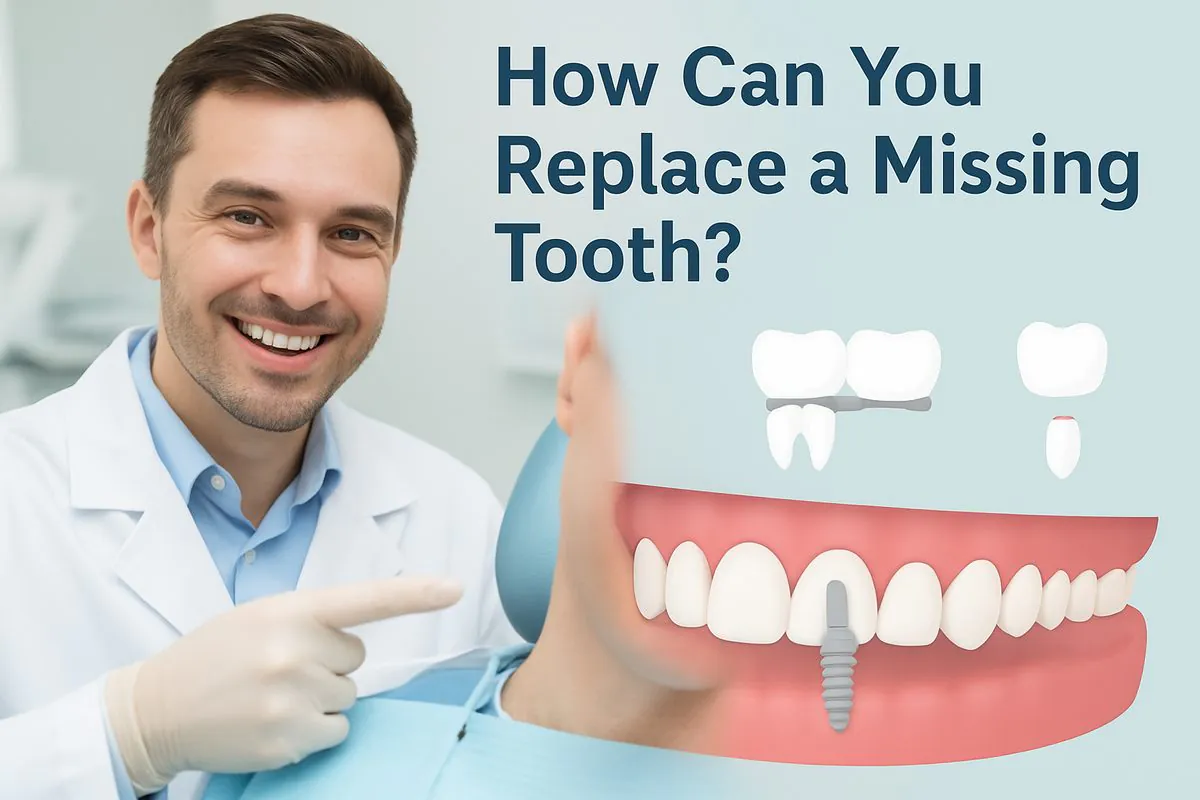
A dentist smiling and pointing to a dental implant in a patient's mouth, with other replacement options arrayed in the background. The text on the image says "How Can You Replace a Missing Tooth?"

Losing a tooth is common and can occur due to decay, injury, or gum disease. You may wonder how to replace a missing tooth and which option best fits your life. This short guide explains practical choices, what to expect during treatment, and next steps so you can make a clear decision with your dentist.

Why replacing a missing tooth matters

Leaving a gap affects more than looks. You may have trouble chewing or speaking clearly. Adjacent teeth can drift, creating bite changes and uneven wear. Over time, the jawbone where the tooth was can shrink, making future replacement harder. Replacing a tooth helps preserve function, appearance, and long-term oral health.

How can you replace a missing tooth? — Main options explained

Dental implants

A dental implant is a titanium post placed in the jaw that holds a crown. Implants feel and function like natural teeth, help preserve bone, and can last many years with good care. The typical timeline is months from surgery to the final crown. Good candidates have healthy gums and sufficient bone, or can undergo grafting.

Fixed dental bridges

A traditional bridge uses crowns on teeth next to the gap to hold a false tooth. Bridges are faster and avoid surgery. They work well when neighboring teeth already need crowns. Downsides include altering healthy teeth and higher long-term maintenance if supporting teeth change.

Removable partial dentures

Removable partial dentures attach to remaining teeth and can replace one or several teeth. They are usually the most affordable option and can be a short- or long-term solution. Partials require daily cleaning and may feel less stable than fixed options. They are good for budget-conscious patients or temporary use.

Resin-bonded (Maryland) bridges

This less-invasive bridge bonds a false tooth to metal or ceramic wings, which are cemented to the backs of adjacent teeth. It’s often used for front teeth, where bite forces are lower. It preserves tooth structure but is less durable for back teeth or heavy chewing.

Choosing to delay or not replace

Some people delay replacement due to cost or medical issues. Short-term, this may be fine, but long-term risks include shifting teeth, bone loss, and more complex future treatment. Discuss timing with your dentist to avoid avoidable problems.

How to choose the best option for you

Health and anatomy

Bone level, gum health, and existing dental work determine which choices are possible. Implants need adequate bone; bridges need strong neighboring teeth. A dentist will evaluate X-rays and scans before recommending options.

Function, appearance, and lifestyle

Consider how much chewing you do, how visible the tooth is, and whether you prefer a fixed or removable solution. Athletes or heavy chewers may favor implants for stability; front-tooth cases often lean toward less visible restorations.

Cost and maintenance

Compare upfront cost and long-term value. Implants cost more initially but often last longer. Bridges and partials may be cheaper now, but require replacement or repairs over time. All options need regular dental care.

What to expect during treatment

Expect an exam with images, a treatment plan, and a timeline. Steps may include any needed extractions or grafting, placement or preparation of supports, final restoration placement, and follow-up visits to monitor healing and fit.

Costs, insurance, and financing basics

Insurance may cover part of bridges or dentures, but often covers less for implants. Typical ranges vary widely by region and complexity. Many practices offer payment plans, CareCredit, or in-house financing to spread costs.

Why choose Lakeview Comprehensive Dentistry for tooth replacement

Lakeview Comprehensive Dentistry uses a 90-minute diagnostic exam with 2D/3D imaging and chairside photos to build a precise plan. Their on-site digital lab and same-day milling allow accurate restorations. Sedation options and decades of Lake County experience support predictable, patient-focused care.

Next steps / Call to action

Schedule a diagnostic visit to review images and get a personalized plan. A focused exam will show which option fits your health, budget, and goals. Contact the office to book a consultation and take the next step toward restoring your smile.