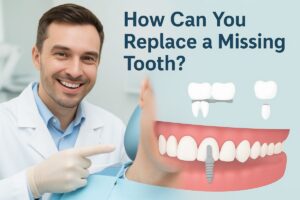

If you’re asking “what’s the average cost of a dental implant“, a single implant (implant post + abutment + crown) typically runs about $3,000–$6,000 nationwide.
Costs vary by case—simple single-tooth work sits near the low end, while multi-tooth implants or full-arch reconstructions can be much higher. This post breaks down what affects price, how insurance and financing usually work, smart questions to ask at a consult, and how to get an exact quote for your situation.
What’s The Average Cost Of A Dental Implant? Typical Price Ranges
A single implant replacement (post, abutment, and crown) commonly falls between $3,000 and $6,000. If you need several implants or an implant-supported bridge, expect $7,000–$30,000, depending on the number of teeth replaced. Full-arch options like All-on-4 or full-mouth reconstruction often start around $20,000 per arch and can be much more. These are national typical ranges — your final cost depends on your mouth, materials, and provider.
What Makes Up the Price: Components of Implant Cost
Implant hardware
The implant post is usually titanium or zirconia. Brand, design, and the implant system chosen affect cost. Premium brands or specialty implants cost more but may offer better long-term data.
Abutment and crown (prosthetic)
The abutment connects the post to the crown. The crown material (porcelain, zirconia) and lab fees matter. Same-day milled crowns in a digital lab can cost more up-front but reduce visits.
Surgery, imaging, and planning
Surgical fees cover placement, local anesthesia or nitrous, and any guided-surgery planning. Digital 3D imaging (CBCT) and computer-guided planning add accuracy — and cost.
Additional treatments
Extractions, bone grafts, sinus lifts, or periodontal care raise the total. If bone loss is present, grafting can add several hundred to several thousand dollars.
Key Factors That Drive Price Variation
Provider experience and training, case complexity, and the use of advanced tech (digital scanning, guided implants, in‑house lab work) all change cost. Better diagnostics and planning can reduce complications, often saving money in the long term, even if the initial cost is higher.
Insurance, Financing, and Ways To Lower Out-of-Pocket Costs
Many dental plans limit or exclude implants. Some plans offer partial coverage for the crown or related services. Lakeview handles non-contracted insurance plans with transparency and focuses on patient advocacy over plan rules. Common financing options include CareCredit, Proceed Finance, Cherry, and in-office payment plans. Dental schools, seasonal specials, or bundled case pricing may help, but check quality and provider experience.
Is A Higher Price Always Better?
Not always. But higher fees can reflect better diagnostics, advanced materials, and experienced clinicians — factors that often mean fewer complications and longer-lasting results. Evaluate value: long-term success and lower revision risk often justify higher up-front costs.
Questions To Ask At Your Implant Consultation
Ask for a full out-of-pocket estimate and what it includes (imaging, lab, crown). Ask about the doctor’s implant experience and full-arch cases, sedation options, warranties or guarantees, timeline from placement to crown, and financing choices.
Why Consider Lakeview Comprehensive Dentistry For Implants
Lakeview Comprehensive Dentistry offers a 90-minute diagnostic exam with ultra-low-dose 3D imaging, a fully digital on-site lab for precise restorations, and advanced postdoctoral-trained clinicians. They provide sedation options, strict sterilization, and clear financing. Their approach focuses on thorough diagnostics to deliver predictable, long-lasting results.
Next Steps: How To Get An Accurate Quote
Schedule a diagnostic 90-minute exam for a tailored plan and exact cost. Bring medical history and insurance info. Direct clinician access and detailed imaging let your team give a precise estimate and a clear timeline for your implant care. Contact Lakeview Comprehensive Dentistry today to get started.